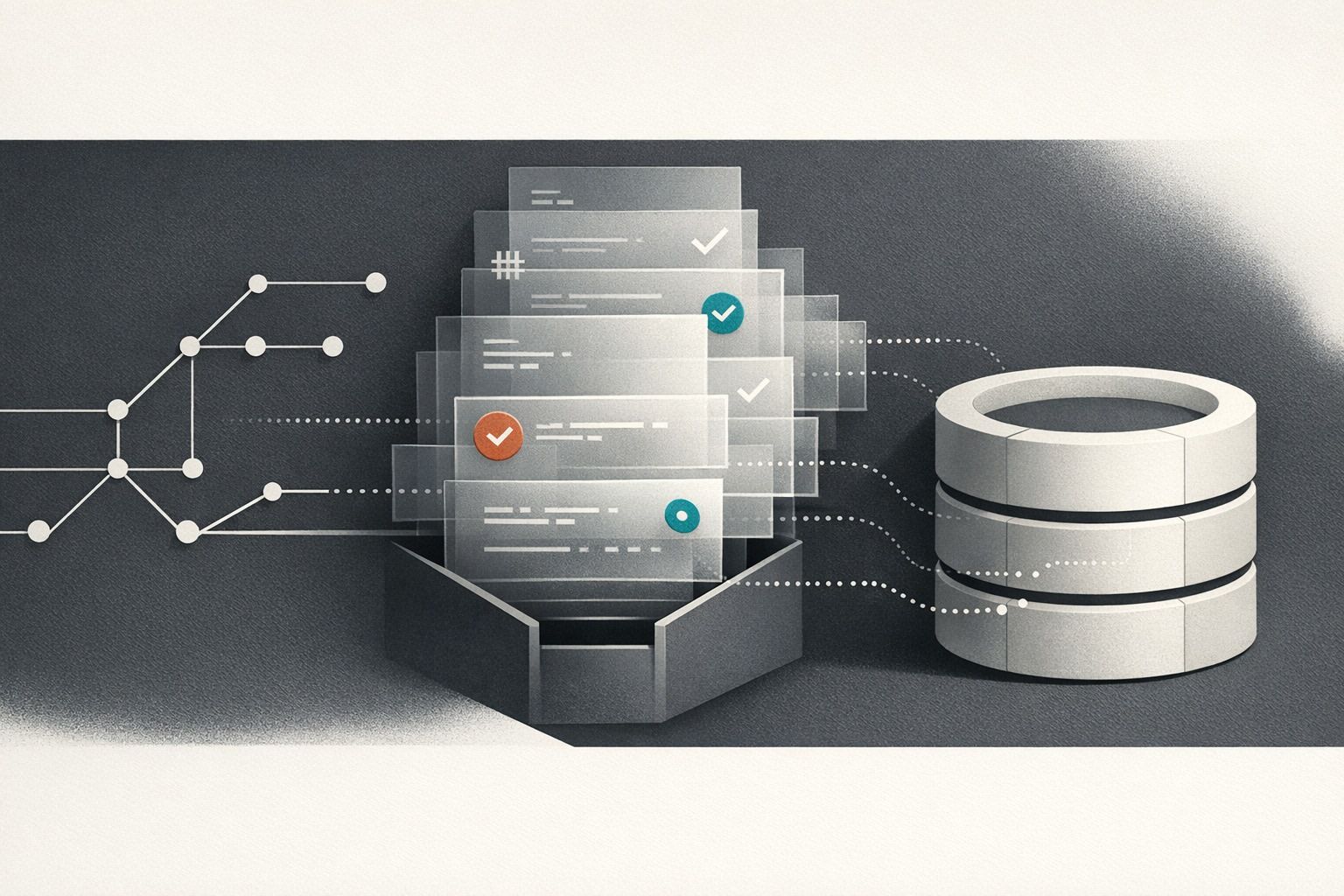
From AI Builder to SOC 2 Evidence Automating Change Management with GitHub and Supabase
By Taylor
Automate SOC 2 change evidence by linking GitHub PR metadata, Supabase logs, and deploy pipelines into audit-ready packets.
Audit-ready change management without the busywork
SOC 2 change management often fails for a simple reason: teams ship fast, but the evidence trail is scattered. Product work lives in issues, design tweaks happen in a builder, code changes land in pull requests, deployments run in pipelines, and production behavior shows up in logs—yet auditors want a single, consistent story: what changed, who approved it, what was tested, and what went to production.
If your app is built on a modern stack (React + Supabase + CI/CD), you can automate a large share of this evidence by treating GitHub PR metadata, Supabase logs, and deploy pipelines as your “system of record” for change events. This approach fits especially well when you start from an AI builder that can sync to GitHub from day one, like lovable.dev, because you can keep rapid iteration while still generating a clean audit trail.
What auditors typically expect for SOC 2 change management
SOC 2 doesn’t mandate one exact workflow, but auditors commonly test for controls that demonstrate:
- Authorization (changes are approved before deployment)
- Segregation of duties where appropriate (not always strict, but risky changes should have independent review)
- Testing/verification (automated checks, manual QA notes, or both)
- Traceability from request → code → deploy → production
- Emergency change handling (documented exceptions, follow-up review)
The key is not producing perfect documents; it’s producing repeatable evidence that your process actually runs the way you say it does.
Design the evidence map first then automate
Before writing automation, define your evidence map: the minimum set of artifacts that will satisfy your auditor for each change type. A practical default is:
- Change request: issue/ticket ID, risk label, scope
- Implementation record: GitHub PR with description, commits, files changed
- Approval: review(s) + merge event
- Test evidence: CI checks + optional QA checklist
- Deployment evidence: pipeline run ID, environment, timestamp, version/commit SHA
- Production verification: Supabase audit/log references or app telemetry confirming behavior post-deploy
Once you align on this map, you can standardize PR templates and pipeline outputs so evidence becomes a byproduct of shipping.
Use GitHub PR metadata as the backbone
1) Enforce a PR template that produces auditor-friendly context
Make PRs carry the narrative auditors look for. A lightweight template usually works better than heavy forms:
- Why: short summary + link to ticket
- Risk: low/medium/high and what could break
- Security/privacy impact: auth changes, data access, PII handling
- Testing: what CI covers + any manual steps
- Rollout: feature flag, migration steps, rollback plan
Then make the template enforceable with simple checks (for example, requiring a ticket reference or a risk label) so “evidence completeness” is automatic.
2) Turn approvals into structured evidence
GitHub already records who reviewed, who approved, and who merged. To make that audit-ready:
- Require at least one approval for non-trivial changes.
- Use CODEOWNERS for sensitive areas (auth, billing, data access).
- Require passing status checks before merge.
This turns the PR timeline into a reliable proof of authorization and verification without maintaining a separate spreadsheet.
3) Tag changes by risk and type
Labels are undervalued evidence. A consistent label set (for example: security, db-migration, customer-impacting, emergency) makes it easy to sample high-risk changes during an audit and prove you treated them differently.
If you already run a planning workflow that turns feedback into prioritized work, connect that upstream metadata to the PR. A good companion pattern is a “feedback-to-plan” intake that tags requests by risk before they become code; see this churn risk build plan pipeline for a practical example of risk tagging feeding execution.
Supabase logs as production evidence not just debugging output
When your backend is Supabase (Postgres, auth, storage, realtime), you have a lot of operational signal. The goal isn’t to dump raw logs into an auditor folder; it’s to be able to answer: “After deployment X, did the system behave as expected, and do you have records showing it?”
What to capture from Supabase for SOC 2-friendly traceability
- Database migrations applied: migration job run, timestamp, and the commit SHA that introduced it.
- Auth/admin events: changes to auth settings, user management actions, role changes.
- Data access patterns for sensitive tables (depending on your logging posture and privacy constraints).
- Security-relevant events: policy updates, RLS changes, storage bucket policy changes.
A practical pattern is to create an “evidence extractor” job that, given a commit SHA or deploy ID, fetches the relevant log window and stores a short, structured summary (not full raw logs) in an evidence bucket.
Deploy pipelines as the source of truth for “what is running”
Auditors often ask some version of: “How do you know what code is in production?” Your pipeline can answer that automatically if it outputs consistent metadata.
Minimum pipeline outputs to store per deployment
- Environment (preview/staging/production)
- Git reference (commit SHA and PR number if available)
- Artifact identifier (image digest, build ID)
- Who triggered it (actor) and how (merge to main, manual approval)
- Status (success/failure) and links to logs
To reduce friction, publish this deployment metadata to a durable store (a table, bucket, or a simple evidence API). Then your audit exports become a query, not a scavenger hunt.
Connect the dots with an automated evidence packet
The most useful automation is the one that produces a single “change packet” per production deploy, with stable identifiers and links back to source systems. A straightforward packet can include:
- Deploy ID + timestamp
- Commit SHA + list of merged PRs
- For each PR: approvals, checks, labels, linked ticket
- Migration job results (if applicable)
- Supabase log summary for the rollout window
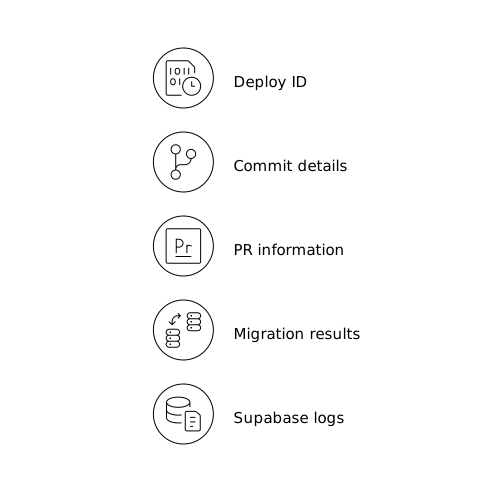
Store the packet in an immutable location (append-only table or bucket) and retain it according to your policy.
Safe database changes are where audits get painful
Database migrations are a frequent SOC 2 focus because they’re high impact and sometimes manually executed. The easiest way to stay audit-ready is to treat migrations as code, reviewed in PRs, and executed by controlled jobs. If you want a concrete pattern for Git-reviewed migration workflows, this is a useful reference: safe self-service database changes with Git-reviewed migration jobs.
Where an AI builder fits in without breaking auditability
AI-assisted building can look “too magical” to auditors if it bypasses normal controls. The fix is simple: make sure AI-generated changes still land as code changes with PR review, CI checks, and deploy records. With lovable.dev, teams can iterate quickly in a builder experience while syncing the project to GitHub early, so every meaningful change can be tracked through the same PR → pipeline → production evidence chain.
The operational takeaway: keep the speed of AI prototyping, but make GitHub and your pipelines the canonical record for anything that reaches production.
Frequently Asked Questions
How can lovable.dev projects generate SOC 2 change management evidence automatically?
Use GitHub as the system of record: require PR templates, approvals, and passing checks, then have your CI/CD pipeline emit deploy metadata (commit SHA, actor, environment). For lovable.dev apps synced to GitHub, AI-generated changes still flow through the same PR and deploy trail, making evidence reproducible.
What GitHub PR fields matter most to auditors reviewing lovable.dev deployments?
Auditors typically care about traceability and authorization: ticket link, risk label, reviewer approvals, status checks, merge commit SHA, and a clear testing note. For lovable.dev teams, a consistent PR template plus required reviews is usually the highest-leverage setup.
Which Supabase logs are useful for SOC 2 evidence in a lovable.dev stack?
Focus on security- and change-relevant events: migrations applied, auth/admin configuration changes, policy/RLS changes, and storage access policy updates. Store short, structured summaries tied to a deploy ID rather than dumping raw logs.
How do you link a production deploy back to a PR for lovable.dev apps?
Have your pipeline record the exact commit SHA deployed and, if possible, the PR number(s) merged into that commit. Then generate a “change packet” per deploy that lists PR approvals, CI results, and any migrations, so the chain is deploy → SHA → PR(s).
Do lovable.dev teams need separate documentation for emergency changes under SOC 2?
Usually yes, but it can be lightweight: label the PR as emergency, allow a controlled exception path if needed, and require a follow-up review after deployment. The key is that lovable.dev changes still create an immutable PR and deploy record showing what happened and when.