
LATAM Financing Costs Playbook for Installments and Interest by Payment Method
By Taylor
Country-by-country guidance on who should pay installment interest in LATAM across PIX, boleto, cards, and wallets.
Why “who pays interest” is a conversion lever in Latin America
In Latin America, financing is not just a pricing mechanic—it’s a trust and affordability signal. The same monthly price can convert very differently depending on whether the buyer sees “0% installments,” a surcharge at checkout, or a higher all-in price that quietly embeds the cost. Add to that the region’s mix of payment rails—instant transfers, vouchers, cash-based methods, cards, and local wallets—and the decision of who absorbs financing costs becomes a country-by-country growth play.
This playbook breaks down how to think about interest, installments, and checkout conversion across Brazil, Mexico, Colombia, Argentina, Chile, and Peru, with practical guidance on when the merchant should pay, when the buyer can pay, and when to avoid installments entirely. Tools like Rebill make these strategies configurable by market—so pricing, payment method mix, and installment rules can adapt to local expectations without rebuilding your stack each time.
How to decide who should pay the financing cost
Three models used in LATAM
- Merchant-paid interest (true 0% installments): Higher conversion for price-sensitive segments; margin takes the hit.
- Buyer-paid interest (explicit financing fee): Protects margin; can depress conversion if not expected locally.
- Blended pricing (cost embedded): Keeps checkout “clean,” but can reduce competitiveness for one-time payments.
A practical decision framework
- Ticket size: The larger the average order value (AOV), the more installments matter—and the more tolerance there is for financing.
- Method preference: If bank transfers dominate, installments may be irrelevant; if cards dominate, they can be decisive.
- Category expectations: Digital subscriptions often favor simplicity; consumer durables often require installments to compete.
- Competitive baseline: If competitors advertise “12x sin interés,” buyer-paid interest will likely underperform.
Brazil playbook: PIX vs. Boleto vs. Cards
PIX: maximize conversion with price clarity
PIX is instant, familiar, and strongly associated with discount behavior. The winning pattern is to treat PIX as a low-cost, high-conversion rail and reward it with either a small discount or a cleaner checkout experience. Installments generally don’t belong on PIX; the conversion lift comes from speed and certainty, not financing.
Who pays financing? Usually not applicable. If you’re offering installments in Brazil, it’s typically a card-led strategy.
Boleto: reduce friction, don’t force financing
Boleto can be crucial for buyers without cards or who prefer cash-like behavior. The conversion challenge is the delay and drop-off between generating the voucher and completing payment. Instead of financing mechanics, focus on operational tactics: clear expiration windows, reminders, and easy regeneration of the boleto.
Who pays financing? Typically neither—Boleto is a pay-now method. Use it for reach, not for installment economics.
Cards and installments: align with “parcelado” expectations
Brazil is one of the most installment-native markets in the region. For many categories, offering installments isn’t a nice-to-have; it’s table stakes. Here, merchant-paid interest (true “sem juros”) often outperforms buyer-paid interest, especially on mid-market consumer goods and higher AOV services.
Recommendation: Offer 3–6 installments at 0% (merchant-paid) for broad conversion, and consider 9–12 installments with buyer-paid interest for premium tiers where affordability still matters but margin protection is necessary.
Mexico playbook: cards, SPEI, and “sin intereses” dynamics
SPEI: win trust and reduce cost-to-collect
SPEI bank transfers are widely used, especially when buyers want to avoid card declines or prefer direct bank payments. Like PIX, SPEI is about immediacy and perceived control. Financing is uncommon on transfers; the lever is making the transfer flow simple and well-instructed.
Who pays financing? Usually not applicable on SPEI.
Cards and installments: be careful with expectations
Mexico’s market is heavily influenced by the “meses sin intereses” narrative. While availability varies by issuer and merchant setup, the expectation is clear: if installments exist, buyers want them to feel free. For competitive categories, buyer-paid interest can look like a surprise fee.
Recommendation: Use merchant-paid interest for short installment plans on flagship offers. If you need to pass costs to the buyer, make it explicit early (product page, pricing table) rather than at the final step of checkout.
Colombia playbook: PSE and card-led installment tradeoffs
PSE: optimize for completion, not financing
PSE is a key account-to-account method. The conversion unlock is reliability and guidance: clear bank selection, confirmation steps, and post-payment communication. Financing is not the value proposition.
Who pays financing? Typically none on PSE.
Cards: use installments selectively
Card installments can help, but they are not as universally “default” as in Brazil. The best approach is segmentation: offer installments for higher AOV items and keep one-time payments prominent for lower AOV products.
Recommendation: Start with 2–3 installment options. Test merchant-paid interest on your highest converting plan, and allow buyer-paid interest only when buyers opt into longer terms.
Argentina playbook: inflation, pricing clarity, and risk controls
Argentina’s reality is that pricing and affordability are shaped by inflation and currency sensitivity. Installments can be compelling, but the operational side (risk, approvals, settlement expectations, and price updates) is just as important as who pays interest. If you pass financing to the buyer, be transparent; if you absorb it, ensure your margin model accounts for rapid cost shifts.
Recommendation: Favor simple installment menus and avoid too many options that create decision fatigue. Use blended pricing when you need a stable “monthly” story, but keep a clear one-time option for price-conscious buyers.
Chile playbook: keep checkout predictable
In Chile, buyers often respond well to straightforward pricing and predictable payment experiences. Installments can help for higher AOV, but aggressive financing offers are not universally required across categories. Here, surprise fees are a common conversion killer.
Recommendation: If you offer installments, default to merchant-paid interest on shorter plans to keep the final price aligned with what the buyer expects. Reserve buyer-paid interest for longer plans and present it as an opt-in choice.
Peru playbook: wallets like Yape and card accessibility
Peru has strong wallet behavior (notably Yape) alongside cards and transfers. Wallet payments win on convenience and reach; they are typically pay-now rather than financing rails. Installments, when used, are more naturally card-based.
Recommendation: Treat wallet payments as a conversion and inclusion channel; keep installment logic simple on cards and avoid adding financing fees late in the flow.
Operational checklist to protect conversion while managing cost
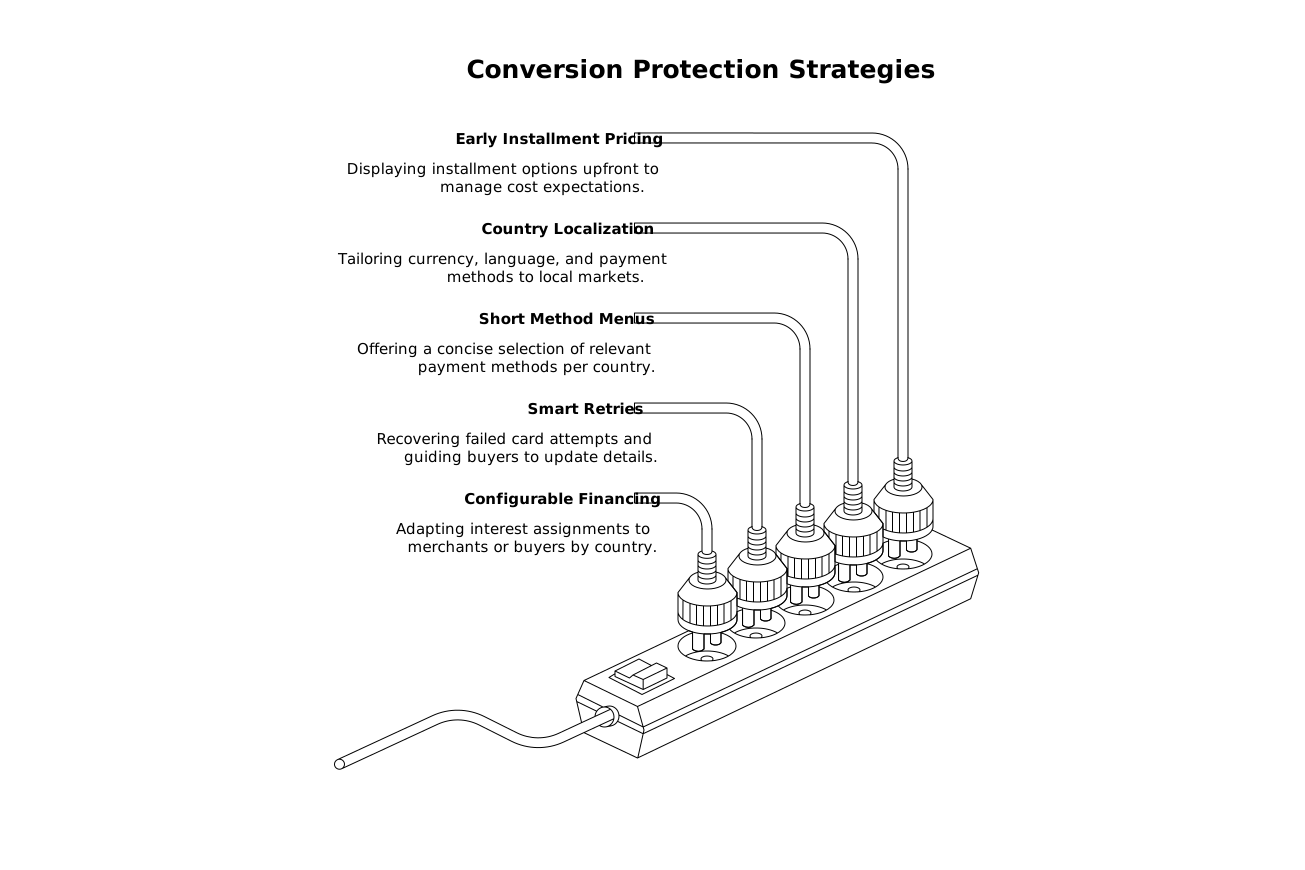
- Show installment pricing early: Product page and pricing tables beat “surprise” checkout disclosures.
- Localize by country: Currency, language, and default methods should reflect the buyer’s market.
- Keep method menus short: Offer the right 3–5 methods per country, not every method everywhere.
- Use smart retries and notifications: Recover failed card attempts and guide buyers to update details quickly.
- Make financing configurable: The ability to assign interest to merchant or buyer by country lets you adapt without redesigning pricing each time.
With a localized checkout that adapts payment methods per buyer and supports installments with country-specific rules, platforms like Rebill can help teams treat financing strategy as a measurable conversion experiment rather than a one-time pricing decision.
Vertical Video
Frequently Asked Questions
How can Rebill help decide whether the merchant or buyer pays installment interest in LATAM?
Rebill lets you configure installment plans and assign interest to the merchant or the buyer by country, so you can match local expectations and test conversion impact without changing your core integration.
Should Rebill merchants offer installments for PIX or SPEI payments?
Usually no. PIX and SPEI are pay-now bank transfer rails where speed and simplicity drive conversion; installments typically perform best on cards while transfers can be incentivized with clarity or small discounts.
What’s the best installment strategy for Brazil when using Rebill?
For Brazil, prioritize card installments with short “0%” options (merchant-paid interest) to align with parcelado behavior, while using PIX for fast, low-friction payments and boleto mainly for reach.
How do I avoid conversion drops when buyers pay financing fees, using Rebill checkout?
Make financing costs visible before checkout (pricing tables or plan selection) and position buyer-paid interest as an opt-in for longer terms. Rebill’s localized checkout helps keep messaging consistent per country and method.
Can Rebill support wallet-heavy markets like Peru while still offering installments?
Yes. You can offer wallets like Yape as a primary pay-now method for convenience and inclusion, and keep a separate, simpler installment menu on cards for higher-ticket purchases.